

Introduction
Products within the Solvent, Dried category support chemical reactions in which uncontrolled moisture can reduce reagent activity, alter selectivity or create unwanted by-products.
Dried solvents are commonly associated with sensitive organic and organometallic chemistry. However, their value depends on how they are selected, transferred, stored and incorporated into the complete reaction workflow.
A solvent supplied with low water content can quickly absorb moisture when exposed to laboratory air. Reliable results therefore require control from the moment the container is opened until the reaction and work-up are complete.
Why Is Solvent Quality Only One Part of the Process?
A dried solvent may meet its original moisture specification when supplied, but poor handling can change its condition before it reaches the reaction vessel.
Common sources of moisture include:
- Wet glassware
- Humid laboratory air
- Damaged closures
- Contaminated transfer tools
- Repeated container opening
- Improperly dried starting materials
- Residual water in tubing or funnels
Researchers should treat the solvent, equipment, reagents and atmosphere as one connected system. Controlling only the solvent may not protect a highly sensitive reaction.
How Should a Solvent Be Matched to the Reaction?
The Solvents for Synthesis category includes solvents intended to support different organic transformations.
The correct choice depends on more than water content. Researchers should consider:
- Solvent polarity
- Boiling point
- Reagent solubility
- Substrate solubility
- Coordination behaviour
- Reaction temperature
- Chemical stability
- Ease of removal
- Waste-handling requirements
A highly dried solvent may still be unsuitable if it reacts with the reagent or fails to dissolve the starting materials.
Solvent selection should therefore be based on both moisture requirements and chemical compatibility.
How Do Other Synthesis Reagents Influence Solvent Choice?
Products within the wider Synthesis Reagents category may include activating agents, bases, reducing materials, oxidising materials and other compounds used during multistep synthesis.
Each reagent may impose different solvent requirements.
For example, a solvent may need to:
- Stabilise a reactive intermediate
- Remain inert towards a strong base
- Support a controlled reduction
- Dissolve an inorganic component
- Permit cooling to a low temperature
- Allow easy removal before the next stage
Selecting the solvent without considering the entire reaction sequence may create problems during later processing or purification.
Why Must Reactive Functional Groups Be Considered?
Water is not the only substance capable of deactivating moisture-sensitive reagents. Alcohols, amines, carboxylic acids and other proton-containing groups may also interfere.
Products within Protecting Groups can support strategies in which a reactive functional group is temporarily blocked during a sensitive transformation.
Before selecting a protection strategy, researchers should evaluate:
- Stability under reaction conditions
- Compatibility with the dried solvent
- Ease of installation
- Ease of removal
- Effect on product purification
- Potential side reactions
The protecting group must remain intact throughout the required step without creating unnecessary difficulty later in the synthesis.
How Should Dry Equipment Be Prepared and Stored?
Glassware and transfer tools may retain moisture even when they appear visually clean and dry.
After an approved drying procedure, suitable Desiccators can help protect certain laboratory items and moisture-sensitive materials from humid air before use.
A dry-equipment workflow may include:
- Cleaning equipment thoroughly
- Applying an appropriate drying method
- Allowing safe cooling
- Protecting equipment from open air
- Inspecting joints and closures
- Recording preparation where required
Hot glassware should not be assembled or handled until it has cooled safely. The drying method must also be compatible with the equipment and any attached components.
How Can Solvent Be Transferred Without Unnecessary Exposure?
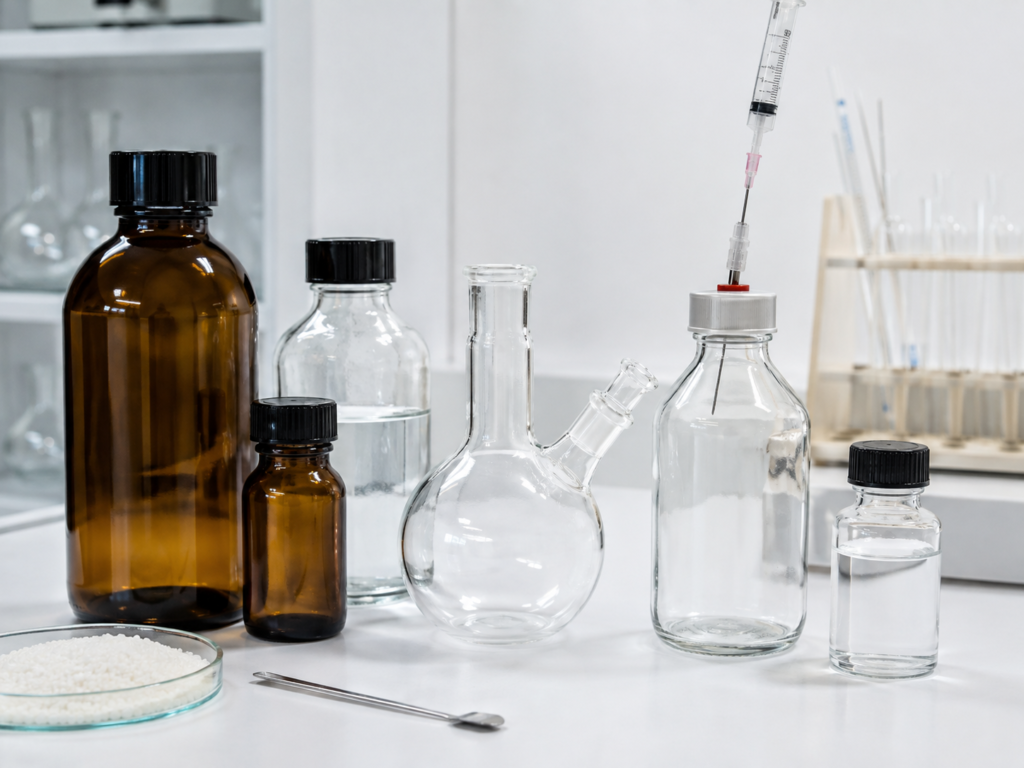
Products such as Glass Syringes can support controlled liquid transfer when they are chemically compatible with the solvent and reaction.
Before transfer, users should confirm that the syringe is:
- Clean
- Completely dry
- Free from damaged parts
- Suitable for the required volume
- Compatible with the solvent
- Properly connected to the selected needle or transfer system
A wet or contaminated syringe can introduce enough moisture to affect a small-scale reaction.
The withdrawal and transfer procedure should minimise air contact while maintaining safe pressure control.
Why Is Controlled Addition Important?
Some reactions involving dried solvents and reactive reagents release heat rapidly. Adding one component too quickly may cause local overheating, excessive boiling or unwanted side reactions.
Suitable Dropping Funnels can support gradual addition during larger or carefully controlled laboratory reactions.
Controlled addition helps researchers manage:
- Reaction temperature
- Reagent concentration
- Mixing efficiency
- Gas formation
- Reaction selectivity
- Overall safety
The funnel should be dry, securely fitted and compatible with the reaction atmosphere. Addition rate should be based on the observed reaction response rather than convenience.
How Should an Opened Solvent Container Be Managed?
Once a dried solvent container has been opened, its condition may gradually change.
Laboratories should record:
- Opening date
- Solvent batch
- User initials
- Storage location
- Withdrawal method
- Number of repeated uses where relevant
- Any visible changes
- Test results when moisture is monitored
A solvent should not be assumed suitable indefinitely simply because it was originally supplied as dried.
Unexpected changes in reaction performance may indicate moisture uptake, contamination or solvent degradation.
What Should Be Considered During Scale-Up?
A condition that works at small scale may behave differently when larger volumes are used.
Scale-up can affect:
- Heat generation
- Cooling efficiency
- Mixing
- Addition time
- Solvent vapour production
- Quench behaviour
- Waste volume
The process should be reassessed before increasing the batch size. Simply multiplying every quantity may not provide the same temperature and concentration control.
A small-scale safety and compatibility review can help identify risks before larger quantities are handled.
What Safety Controls Are Required?
Many dried solvents are volatile and highly flammable. Some may also be toxic, irritating or capable of forming hazardous degradation products.
Researchers should review the safety data sheet and apply suitable controls for:
- Ventilation
- Ignition prevention
- Protective gloves
- Eye protection
- Chemical storage
- Spill response
- Waste segregation
- Static discharge
- Emergency procedures
Open flames and uncontrolled heat sources should be avoided around flammable solvent vapours.
Conclusion
Dried solvents support moisture-sensitive chemistry, but successful use requires more than selecting a low-water solvent grade.
Researchers must match the solvent to the reaction, consider the compatibility of other synthesis reagents and protect functional groups where necessary. Dry equipment storage, suitable glass syringes and controlled addition equipment can further reduce moisture exposure and improve reaction control.
By managing the complete solvent lifecycle, from selection and opening to transfer, reaction use and scale-up, laboratories can improve reproducibility and reduce preventable synthesis failures.