

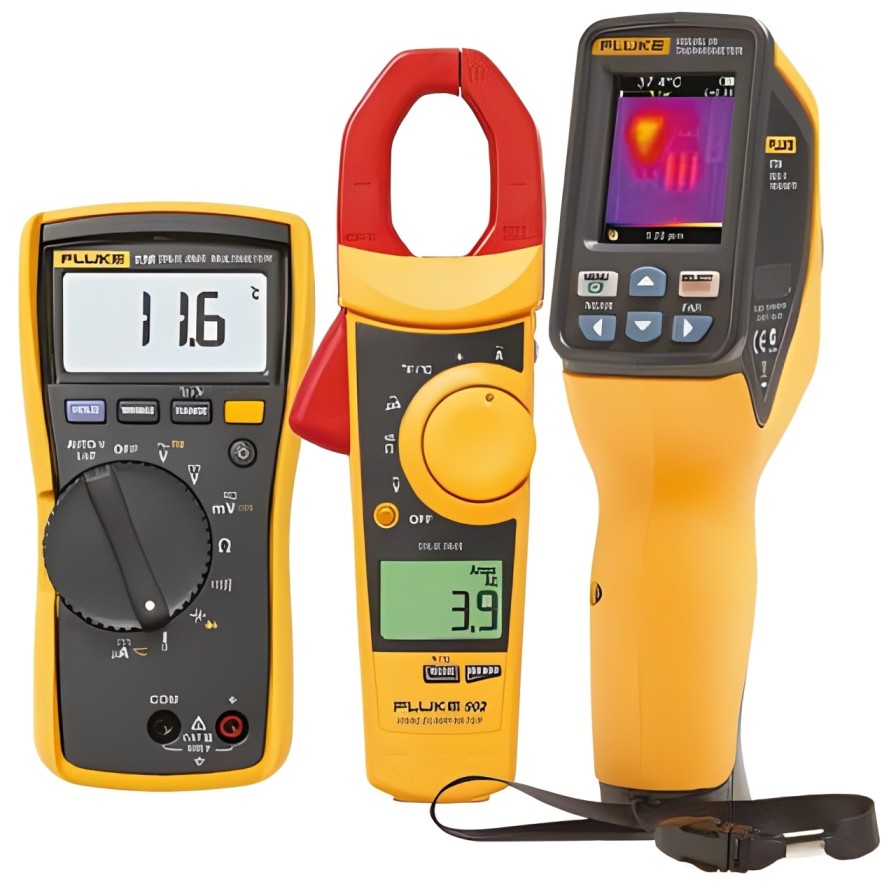
Fluke Thermometer Kit
When temperature affects quality, uptime, or safety, guessing is not an option. A Fluke Thermometer Kit gives technicians a reliable way to measure heat accurately across equipment, processes, and environments. Whether you are validating HVAC performance, checking electrical cabinets, troubleshooting motors, or verifying food and facility temperatures, the right kit helps you work faster and document results with confidence.
Because temperature problems often hide inside systems, you need dependable tools, stable sensors, and the correct probe type for the surface or material. In addition, you want a kit that is practical in real jobs, easy to carry, and consistent across repeated checks. This article explains how a Fluke Thermometer Kit supports professional diagnostics, what to look for, and how to use it effectively in the field.
What is a Fluke Thermometer Kit used for?
A thermometer kit typically combines a meter or reader with compatible probes, accessories, and storage so you can measure temperature in different conditions. Compared with a single thermometer, a kit supports more applications because it includes options for contact measurement on pipes, surfaces, liquids, and air.
Common professional uses include:
- Verifying thermal performance of HVAC supply and return air
- Checking motor and bearing temperatures during maintenance routes
- Spotting overheating in panels, contactors, and connections
- Monitoring process temperatures in production and electronics assembly
- Comparing readings before and after repairs for clear reporting
Because many jobs also involve electronics, having a stable temperature reading helps you diagnose drift, calibration concerns, or heat related failures in controllers and boards.
Key features that matter in a thermometer kit
When you choose a Fluke Thermometer Kit, focus on features that directly improve accuracy, repeatability, and speed. Specifications matter, but usability matters too, especially when your hands are busy or you are working in tight spaces.
Measurement accuracy and stability
Accurate readings depend on sensor quality and the meter’s ability to interpret signals consistently. Choose a kit designed for professional troubleshooting where repeatability is strong across the full working range. If your work involves sensitive electronics, stable readings help you compare results across shifts and sites.
Probe compatibility and sensor options
Most advanced kits support multiple probe types. In many environments, the probe matters more than the meter because the probe determines how quickly and correctly heat transfers into the sensor.
A practical kit often supports:
- Air probes for ambient checks and duct measurements
- Surface probes for pipes, plates, and housings
- Immersion probes for liquids or semi liquids
- Bead or fine tip probes for tight electronics spaces
If you are measuring heat on boards, microcontrollers, or microprocessors, a small contact point is useful. For larger metal surfaces, a surface probe improves contact and reduces error.
Response time in real work
In the field, faster response means faster decisions. A kit with good thermal coupling and responsive probes reduces the waiting time per measurement. This is especially helpful when you are checking multiple points, such as fuses, switches, LEDs drivers, or cabinet hotspots.
Data visibility and documentation
Clear display readability and stable hold functions make measurement easier. Some workflows also benefit from logged results, especially when you compare temperatures before and after replacing cables, connectors, or components like a capacitor in a control circuit.
Where a Fluke Thermometer Kit adds value across industries
Temperature measurement shows up everywhere, but a well chosen kit is most valuable when a small change has big consequences. Below are scenarios where professionals rely on accurate thermal checks to prevent downtime.
Electrical maintenance and safety checks
Overheating is a common warning sign in panels and distribution equipment. During inspections, technicians often compare temperatures across similar circuits to identify problems. A thermometer kit helps validate suspicious heat sources around:
- Contactors and terminal points
- Cable lugs and connectors
- Fuses and switches under load
- Power electronics and control wiring
Because electrical work is safety critical, always follow lockout procedures when required, wear appropriate PPE, and measure in a controlled way. A temperature tool supports safety by helping you confirm abnormal heat before it becomes failure.
HVAC and facility performance
HVAC troubleshooting often involves temperature differentials, airflow checks, and system balancing. With the right probes, you can measure duct air, surface temperatures on coils, and thermal loss points around insulation.
This is also useful in facilities with equipment rooms, server racks, and laptops used for monitoring. Consistent temperature readings help you understand whether cooling is adequate and whether thermal stress is affecting reliability.
Electronics diagnostics and production support
In electronics environments, heat affects performance and component life. Temperature checks support troubleshooting for:
- Controllers showing intermittent faults
- Boards with unstable LEDs or drivers
- Microcontrollers and microprocessors running hot
- Thermal pads that are poorly seated or degraded
- Systems where oils or contaminants change heat transfer
A thermometer kit helps you validate whether cooling improvements or component changes actually reduce temperatures under the same operating conditions.
How to choose the right Fluke Thermometer Kit
The best kit depends on what you measure most often and where you measure it. Instead of picking based only on a broad temperature range, match the kit to your daily work.
Match probes to your surfaces and materials
If you frequently measure pipes, choose a surface probe that grips well and provides consistent contact. If you measure inside cabinets or on small electronics, a fine tip sensor is more practical. If you deal with liquids, ensure the immersion probe is durable and suitable for your environment.
Consider your environment and handling needs
Field work demands rugged protection and clean organization. A kit with a strong case, secure grips, and robust cable routing reduces wear. This matters when you move between sites, climb ladders, or work around vibration.
Think about repeat checks and standardization
If your team follows maintenance routes, standardizing on one kit style makes results more consistent. It also helps when multiple technicians compare readings across equipment, shifts, or locations.
Best practices for accurate temperature readings
Even high quality tools can produce poor results if the sensor is not used correctly. These practical habits improve accuracy and reduce rework.
Improve thermal contact
Surface readings are sensitive to contact. Clean the surface if safe to do so, apply stable pressure, and allow time for the sensor to settle. For rough surfaces, a probe designed for contact improves reliability.
Reduce measurement errors from airflow and reflections
Air movement and radiant heat can affect results. Shield the probe from direct airflow when possible and avoid placing your hand near the sensing area. In cabinets, measure consistently at the same point each time.
Use consistent measurement points
When trending temperatures, choose repeatable locations and document them. For example, always measure at the same connector, the same contactor lug, or the same bearing location. This makes changes meaningful and actionable.
Keep accessories in good condition
Inspect cables and probe connections regularly. Damaged cables, loose connectors, or worn thermal pads can cause unstable readings. Store the kit properly and avoid sharply bending sensor leads.
Putting a Fluke Thermometer Kit into your workflow
A Fluke Thermometer Kit becomes most valuable when it supports decisions, not just measurements. Use it to confirm a suspected overheating component, validate a repair, or establish a baseline for preventive maintenance. Over time, temperature trending helps you detect issues early, reduce downtime, and strengthen safety practices.
When you choose the right probes, follow consistent methods, and measure with purpose, a Fluke Thermometer Kit becomes a dependable part of professional troubleshooting across electrical, HVAC, and electronics work.