
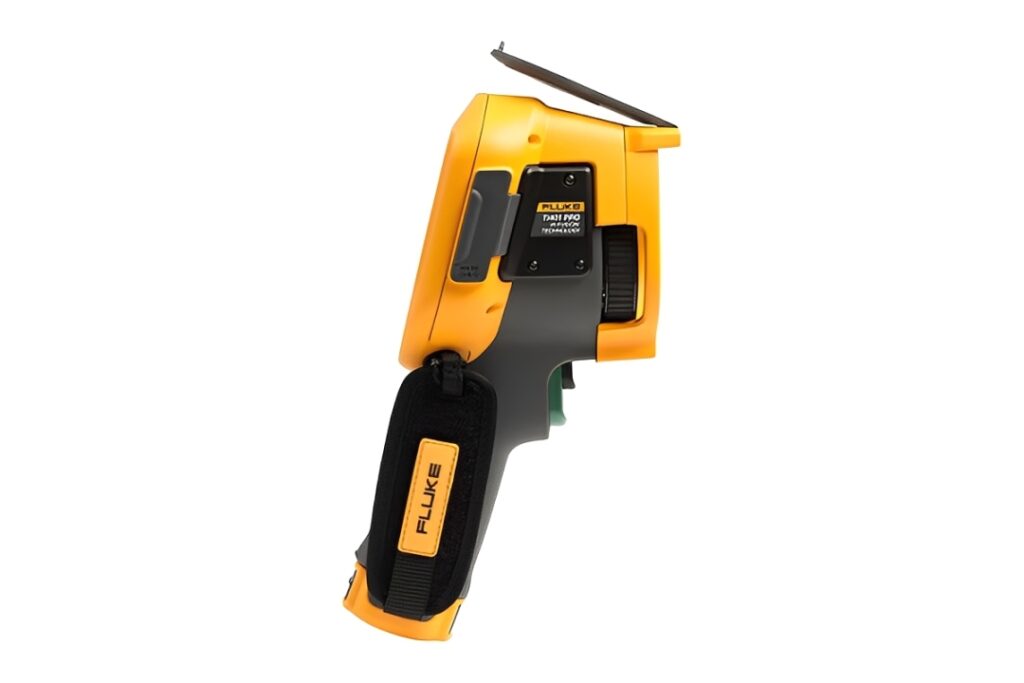
Fluke Industrial Thermal Imager
A Fluke Industrial Thermal Imager helps you see temperature patterns that your eyes cannot. Because heat often signals resistance, friction, overload, or failing components, thermal insights can guide faster, safer decisions.
In busy plants and field sites, a Fluke Industrial Thermal Imager supports preventive maintenance by revealing abnormal thermal signatures before downtime grows. As a result, teams can prioritize repairs, reduce risk, and protect critical assets.
Why does thermal imaging matter in industrial maintenance?
Thermal problems rarely start as major failures. Instead, they begin as small temperature changes that spread across electrical and mechanical systems.
When you capture thermal data early, you can act while the fix is still simple. For example, tightening a loose connection or balancing a load can prevent larger issues that may damage contactors, switches, or fuses.
Thermal imaging also improves safety. Since you can inspect from a distance, you reduce exposure to energized panels, rotating equipment, and high temperature surfaces.
What makes a Fluke Industrial Thermal Imager effective on the job?
A strong thermal imager must perform well in real conditions, not only in ideal lab settings. Therefore, it helps to focus on practical features that improve accuracy, speed, and usability.
Image clarity and measurement confidence
Clear thermal images help you interpret problems quickly. Even more importantly, accurate temperature measurement helps you decide whether a component is within a safe operating range.
Look for features that support confidence in readings, such as:
- Adjustable emissivity options for different materials
- Tools to refine thermal contrast in mixed temperature scenes
- Spot, area, and differential measurements to compare components
- Image capture that stays sharp while you move around equipment
This matters in electronics work where small components like a capacitor, LEDs, or microcontrollers can heat unevenly. It also matters in high power gear where temperature gradients can stretch across busbars and large terminals.
Visual and thermal context in one inspection
Thermal patterns are easier to explain when you can connect them to real objects. A blended workflow helps you align hot spots with cables, connectors, and terminals without guessing.
When your inspection includes both thermal and visual context, you can communicate findings faster to technicians, supervisors, and compliance teams.
Rugged handling for industrial environments
Industrial sites demand dependable tools. Because inspections can happen in tight spaces, on ladders, or near vibrating equipment, handling details matter.
A practical unit should support:
- Secure grip surfaces for gloved hands and sweaty conditions
- Reliable operation around dust and industrial oils
- Fast startup and responsive controls to avoid wasted time
- Easy transfer of images to reports and teams
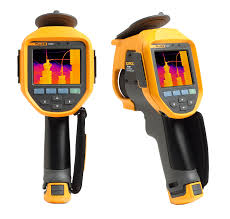
How does thermal imaging help with electrical systems?
Electrical faults often show up as heat before they show up as failure. Consequently, thermal inspections are widely used for switchgear, panels, drives, and distribution equipment.
Finding overheating connections and load imbalance
Overheating commonly appears at:
- Loose lugs and terminals
- Worn connectors and splices
- Undersized cables carrying high current
- Contactors with aging contacts
- Fuses that are stressed or mismatched
Thermal images make it easier to compare phases and spot imbalance. When one phase runs hotter than the others under similar load, you can investigate before the heat damages insulation or causes nuisance trips.
Supporting control panels and automation equipment
Modern panels include controllers, power supplies, relays, and communication modules. Since these electronics run within thermal limits, hot spots can indicate airflow restrictions, overloaded circuits, or failing components.
Thermal checks can also highlight issues around wiring density where cables bunch together and heat accumulates. In addition, thermal pads and proper spacing may help manage heat around sensitive boards and microprocessors.
How does a thermal imager support mechanical maintenance?
Mechanical failures often create heat through friction, misalignment, or lubrication problems. Therefore, thermal imaging is useful across motors, pumps, and rotating assemblies.
Detecting friction, wear, and lubrication issues
Thermal scans can reveal:
- Bearings heating due to wear or misalignment
- Couplings generating heat from mechanical stress
- Seals overheating because of friction
- Gearboxes showing uneven heat patterns
Because industrial oils affect friction and heat transfer, temperature trends can help you decide when to inspect lubrication, verify alignment, or schedule bearing replacement.
Improving condition based maintenance
When you collect thermal images over time, you can compare trends. As a result, you move from reactive repairs to planned maintenance based on real operating conditions.
This also supports better parts planning because you can order components ahead of time instead of rushing after a failure.
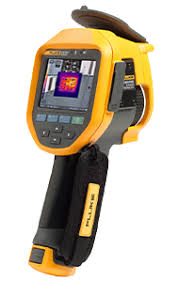
Which features should you compare before choosing a Fluke Industrial Thermal Imager?
Instead of focusing on a single specification, compare the features that match your environment and workflow.
Inspection speed and reporting workflow
A tool is more valuable when it fits your maintenance process. If your team must produce reports, prioritize features that simplify documentation and sharing.
Consider whether the workflow supports:
- Quick capture with minimal menu steps
- Consistent labeling for assets and locations
- Easy export for maintenance records and audits
- Clear images that help technicians act immediately
If your technicians use laptops in the field, smooth transfer matters. When images move quickly into a report, the time savings add up across weekly routes.
Thermal range and application fit
Different sites face different temperatures. Electrical cabinets may require moderate range, while furnaces and process lines may demand higher capability.
Choose a thermal range that suits your highest risk assets. Also consider how sensors inside the tool perform in hot or cold environments because stable measurements reduce rework.
Practical ergonomics for daily use
If inspections happen daily, comfort matters. A balanced design, reliable trigger feel, and firm grips reduce fatigue. In addition, a clear display helps when you work in bright areas or dim plant rooms.
How can you use thermal imaging safely and accurately?
Thermal imaging is powerful, yet accuracy depends on good practice. With the right approach, you get reliable results that lead to correct maintenance decisions.
Use these habits during inspections:
- Match emissivity settings to surfaces when possible
- Avoid reflective angles that can show false hot spots
- Compare similar components under similar load
- Capture context so cables, connectors, and terminals are identifiable
- Record operating conditions to explain temperature changes
When you combine careful technique with a dependable tool, you can reduce false alarms and focus on real risks.
Why is a Fluke Industrial Thermal Imager a smart choice for modern sites?
Industrial teams need tools that support uptime, safety, and accountability. A Fluke Industrial Thermal Imager fits that need by helping you detect issues early, document findings clearly, and plan maintenance with confidence.
Because thermal inspections apply to contactors, switches, fuses, cables, electronics, and rotating equipment, this tool supports many departments with one workflow. Over time, consistent thermal checks can reduce unexpected downtime, improve safety outcomes, and extend asset life across your facility.