

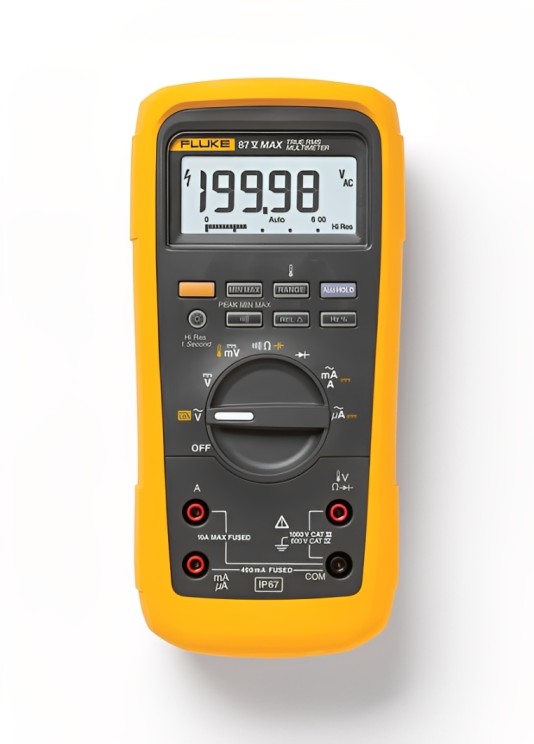
Fluke Handheld Digital Multimeter: What Makes It Essential?
A Fluke Handheld Digital Multimeter is a go to instrument for electricians, maintenance teams, and engineers who need fast, reliable measurements in real working conditions. Because modern systems combine electronics, controls, and power distribution, you need a tool that can confirm values confidently without slowing you down.
In addition, handheld convenience matters when you are tracing faults inside panels, testing cables at endpoints, or validating sensors and controllers in tight spaces. This guide explains how the tool fits real tasks, what features matter most, and how to use it safely and effectively.
Why a Fluke Handheld Digital Multimeter matters today
Industrial and commercial environments are full of mixed loads and sensitive components. As a result, troubleshooting often needs both speed and accuracy, especially when downtime is expensive. A handheld digital multimeter supports practical checks across power, control circuits, and device inputs.
You can quickly confirm whether a line is live, whether a fuse is open, whether a switch is working, or whether a connector is making proper contact. Moreover, it helps validate electronic signals feeding microcontrollers, microprocessors, and other control devices that run automation systems.
Core measurements you will use most often
A quality handheld multimeter focuses on everyday measurements that solve common problems quickly.
Voltage and continuity checks for fast fault finding
Voltage testing is the first step in many diagnostics. For example, you may verify supply at a distribution point, then confirm voltage drop across cables leading to equipment. Continuity testing then helps confirm broken conductors, loose connectors, or damaged grips on test leads.
Common use cases include:
- Verifying line voltage at terminals before working
- Checking continuity through cables after installation
- Confirming switch operation during commissioning
- Tracing open circuits caused by connector damage
Current, resistance, and component verification
Resistance checks help confirm whether a circuit path is intact and whether a component value makes sense. While a multimeter cannot replace every specialized instrument, it often provides enough information to isolate faults before deeper testing.
It can support tasks like:
- Confirming contactors coils are not open circuit
- Checking resistive loads for abnormal readings
- Verifying capacitor behavior during basic checks
- Spotting overheating risks when values drift out of range
Key features to look for in a field ready unit
Not all handheld meters feel the same in real work. Therefore, focus on features that protect the user and reduce misreads.
Safety ratings and build quality
Safety is not optional. A strong safety category rating, quality internal protection, and durable casing reduce risk when working near energized circuits. Also, sturdy input jacks and reliable lead connections reduce failures caused by repeated use.
Practical safety habits include:
- Inspecting leads and grips for cracks before use
- Using the correct input jacks for the measurement
- Replacing damaged cables immediately
- Keeping hands behind finger guards during tests
Clear display and stable readings
A readable display helps when you are in low light or awkward angles. In addition, stable readings reduce guesswork when signals fluctuate due to switching loads or variable controllers.
Look for a meter that supports quick interpretation during:
- Panel work with limited visibility
- Outdoor maintenance with glare
- Rapid go no go checks in production lines
Useful modes that match modern electronics
Many real systems include switching power supplies, LEDs, and control boards. Because of that, a multimeter should handle typical signals cleanly and consistently without confusing results.
Helpful support areas include:
- Testing LEDs and basic diode junctions
- Checking continuity across connectors in harnesses
- Validating stable supply voltage feeding microcontrollers
- Spotting irregular behavior in control inputs and outputs
How it supports troubleshooting across industries
A handheld digital multimeter becomes more valuable as systems become more integrated. Therefore, it is useful to understand where it fits in common environments.
Electrical maintenance and distribution panels
In distribution panels, the meter helps confirm incoming supply, check outgoing circuits, and verify protection components. For example, you may confirm a circuit is isolated, then validate continuity through a fuse and into the load side.
Typical panel tasks include:
- Confirming fuses are intact
- Validating contactors control voltage
- Checking switches and interlocks
- Tracing voltage drop across connection points
Electronics and control systems
Electronics troubleshooting often starts with supply checks and continuity verification. After that, you may confirm stable readings on reference points feeding controllers, then isolate whether a fault is upstream or on the board.
This approach is useful for:
- Control cabinets with multiple controllers
- Sensors connected through long cables
- Field devices with connector wear
- Systems with mixed analog and digital signals
Thermal and sensor related diagnostics
While a multimeter is not a thermal camera, it still supports thermal related maintenance by confirming electrical causes of heat. For example, overheating may result from resistance at a poor connector, a loose terminal, or excessive current draw.
It helps you:
- Confirm abnormal resistance in cables and connectors
- Validate sensor supply voltage and return signals
- Identify loose connections that cause heating
- Support diagnosis before using thermal tools
Best practice workflow for accurate measurements
Using a multimeter effectively is about method, not just features. Therefore, follow a consistent routine to reduce mistakes.
Step by step routine you can repeat
Use this workflow to stay efficient:
- Visually inspect leads, grips, and input jacks
- Select the correct function and range if manual
- Confirm meter operation on a known source when possible
- Test at the source, then move toward the load
- Recheck readings before replacing parts
This approach reduces unnecessary part swaps and improves confidence in decisions.
Avoid common mistakes in the field
Many issues come from rushed setup. Therefore, watch for these problems:
- Measuring current with leads in the voltage jack
- Testing resistance on a live circuit
- Using damaged cables that create unstable readings
- Ignoring connector fit and contact quality at probes
- Skipping isolation steps before touching conductors
Where related components affect multimeter readings
Real installations include components that influence what you see on the display. As a result, it helps to understand what can mislead you.
Connectors, cables, and contact quality
Loose connectors and worn cables can cause intermittent faults that appear and disappear. Therefore, test both ends and gently move harnesses while watching the reading to reveal unstable contact.
Focus on:
- Connector seating and lock condition
- Cable strain points and bend areas
- Corrosion at contact surfaces
- Broken strands inside insulation
Switches, fuses, and contactors in control circuits
A faulty switch can look normal visually but fail electrically. Likewise, a fuse can be open with no visible damage. A quick continuity check can confirm these parts quickly, while voltage checks validate control circuit behavior under load.
Useful checks include:
- Continuity through fuses and switches
- Voltage at contactors coil terminals during activation
- Resistance comparisons across similar devices
LEDs, capacitors, and boards with microprocessors
Modern equipment often uses LEDs for indicators and has control boards with microprocessors. Therefore, the meter can help confirm whether the board receives proper supply and whether basic input paths are intact.
It supports:
- Checking LED junctions for basic function
- Confirming stable supply rails
- Validating continuity between connectors and board inputs
- Ruling out simple power issues before deeper diagnostics
Choosing the right handheld meter for your tasks
Even within one brand, models vary. Therefore, define your typical jobs and match the meter to them.
Consider your environment:
- Industrial panels and motors may require stronger protection and safety rating
- Electronics benches may prioritize precision at low signals
- Field service may need rugged build and reliable lead connections
- Sites with mixed loads benefit from stable readings during switching behavior
Also, think about accessories. Quality test leads, proper probes, and secure grips can matter as much as the meter itself.
Conclusion: Make every test faster, safer, and clearer
A Fluke Handheld Digital Multimeter is built for real world measurement where accuracy, safety, and efficiency must work together. When you choose a model that matches your tasks and follow a consistent workflow, you can diagnose issues across cables, connectors, switches, fuses, contactors, sensors, and modern electronics with greater confidence.